
When a crisis hits—whether it’s a sudden flash flood, a severe storm, or an unexpected local emergency—time becomes your most valuable commodity. In the middle of high-stress situations, having a disaster plan for your pets avoids dangerous delays.
Preparing for a disaster isn’t just about watching the weather channel; it’s about making critical decisions before the adrenaline takes over. Here is how you can build a resilient, comprehensive safety net for your animals.
The “Grab-and-Go” Blueprint
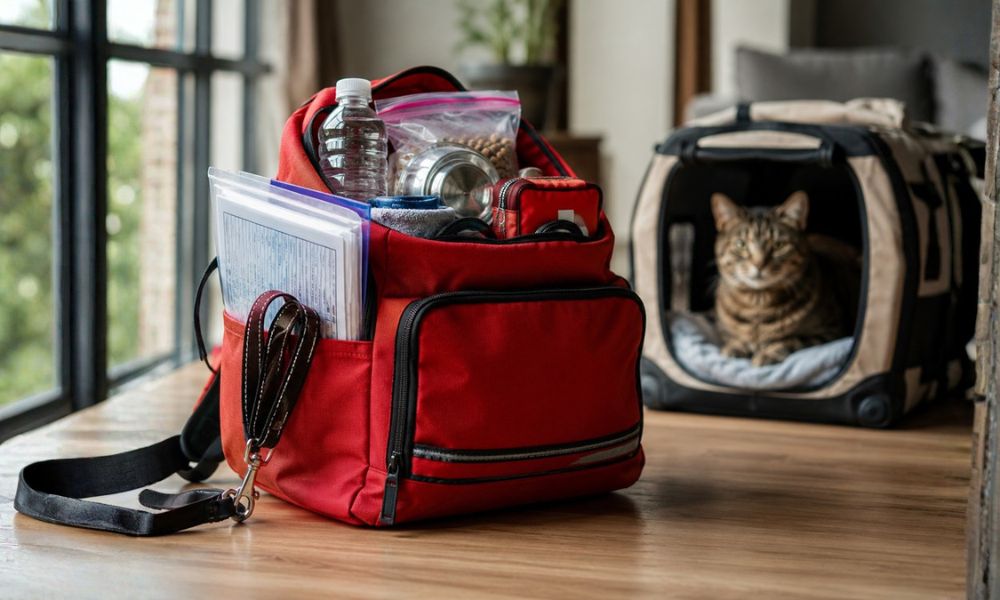
When you are told to evacuate, you should be able to walk out the door in under sixty seconds. That requires a dedicated, pre-packed Pet Emergency Kit stored in an easily accessible location.
Your kit should go beyond just a bag of kibble. Ensure you have:
- A 5-day supply of food and fresh water (remember a manual can opener if using canned food).
- A waterproof folder containing printed vaccination certificates and medical histories.
- A one-week supply of any essential life-saving medications.
- Sanitation essentials: Poop bags for dogs; a small litter tray, litter, and a scoop for cats.
- Secure containment: A sturdy leash and collar for every dog, and a secure, comfortable travel carrier for every cat.
Pro Tip: Keep a current, clear photo of your pet printed inside your medical folder, and ensure a digital backup is saved to the cloud. If you lose cell service during a crisis, that physical photo is your best tool for reunification.
Digital Proofing: Microchips and Medical Readiness
During a community evacuation, emergency shelters can fill up fast. Many public co-sheltering facilities will require proof of up-to-date vaccinations—not just for human safety, but to prevent highly contagious outbreaks like parvo or distemper among the displaced animals. Keeping your pet’s shots current is their passport to safety.
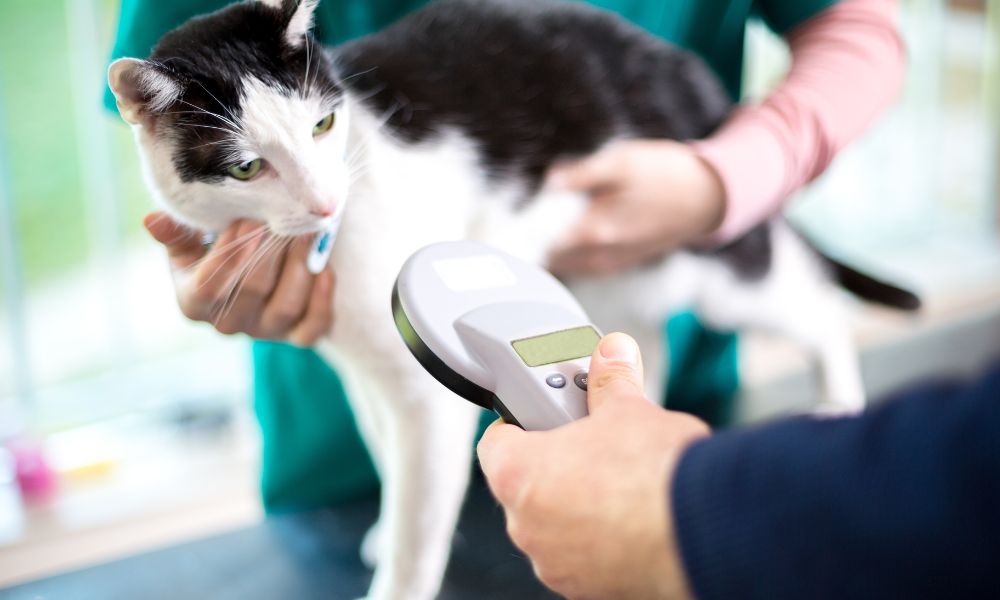
Equally important is your pet’s digital footprint. A microchip is completely useless if it links to an expired phone number or an old address. Make it a habit to log into your microchip registry at least once a year to verify that your contact details are entirely accurate.
Map Their Hiding Spots (And Act Fast)
Animals are incredibly perceptive; they will sense your panic and the shifting atmosphere long before a storm hits. Skittish pets—especially cats—will instinctively bolt for the most inaccessible hiding spots in the house.
If an emergency warning is issued for your area, do not wait until the last minute to gather your animals. Secure them in a single, safe room or a basement immediately. Trying to fish a terrified cat out from behind a heavy washing machine while an evacuation siren is blaring is a situation you want to avoid at all costs.
The Golden Rule of Leaving a Home: Never Confine
In absolute worst-case scenarios where you are forced to leave your home without your pets, never crate them, tie them up, or confine them to a specific room. While it is terrifying to think of your pet running loose outside, a free animal has a fighting chance to seek higher ground or escape danger. An animal locked in a crate or tied to a structure during a flood or fire has no defense.
Furthermore, if you commute far for work, become a proactive forecast reader. If severe weather is predicted while you are away, arrange for a local neighbor or professional pet sitter to move your animals to safety before the roads become impassable.
Map Out Your Route in Advance
Do not assume the hotel down the road will accept your large dog during an emergency. True planning means mapping out multiple pet-friendly lodging options along various evacuation routes—including options that are several hours away, as local accommodations will fill up instantly.
Additionally, visualise the logistics of the journey itself. A common and heart-breaking mistake occurs at busy rest stops or gas stations during an evacuation. Under extreme stress, a pet may bolt out of the car door the second it opens. Always secure your pet’s leash before opening any vehicle doors during a transit stop.
The Power of Community and Mutual Aid
True resilience is built at the neighbourhood level. You cannot always rely on external emergency services to reach you immediately. Building a hyper-local support network is the ultimate safety net.
- The Neighbour Exchange: Pair up with a neighbour who has a different work schedule than you. Give them a spare key and a clear guide on how to handle your pets, and agree to rescue each other’s animals if a crisis happens during work hours.
- Check on the Vulnerable: Offer to help elderly or less-mobile neighbors pack a pet emergency kit or assist them with transport planning.
- Support Local Infrastructure: Communities with strong, well-funded animal welfare programs—like robust spay/neuter initiatives—fare significantly better during disasters. These programs build a local network of educated animal handlers and prevent overcrowded shelters, leaving vital space open for lost and recovered pets after a crisis.
By taking the time to prepare today, you are ensuring that when the unexpected happens, you can focus on what matters most: keeping your entire family safe.
Get Set, Grow!
📣 Do you need to attract more customers for your pet business? Join Pet Sitter Club for access to tons of resources specifically for pet businesses like yours, including: