
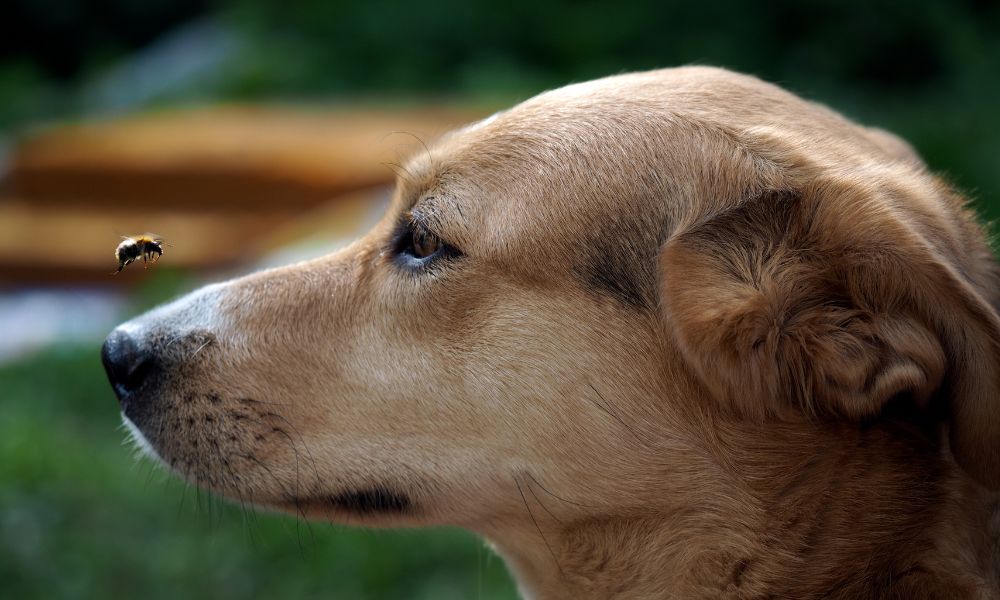
Bee and wasp stings on cats and dogs will be painful and cause distress to your pet. They will most likely be stung on the paw or face, and whilst there is little you can do to stop your pet from being stung by bees and wasps, there are ways to relieve discomfort at home.
However, allergic reactions to bee stings can be fatal for your pet, so you need to know how to administer pet first aid and act quickly to avoid bee and wasp stings becoming an emergency.
Can cats and dogs get stung by wasps and bees?
Cats love to run and hunt, so it’s no surprise that flying or crawling insects are irresistible to them. If your cat goes outside, they will inevitably have an encounter with a wasp or bee at some point. Try to distract them with other toys such as laser pens, toys on a string, etc.
Dogs are more likely to be stung by a bee by treading on one whilst on a walk or during time in the garden. They may also suffer a sting by trying to pat a flying bee with their paw, or even trying to eat one. If you notice that your dog is trying to “play” with bees or wasps, try some basic dog training with distraction and reward.
What should I do for a bee or wasp sting on my cat’s or dog’s paw?
If your cat or dog is stung by a bee or a wasp on their paws, it will often result in swelling. Just like humans, the sting will be painful and some irritations will occur, but this should quickly go away.

Signs that your cat or dog has been stung by a bee/wasp include:
- Yowling or whimpering
- Swelling in the specific area (this can be tricky to spot in long-haired pets)
- Pawing or nibbling at the place they’ve been stung e.g. their paw or face
- Limping
- Drooling
- Agitation
- Hiding (a cat’s natural reaction to pain is to hide)
Clean the area with soap and water, and try not to let the animal scratch or bite because this will make the irritation worse.
If the area is swollen use a cool wet tea towel and hold it over the sting for five minutes. Alternatively, wrap an ice pack in a washcloth but always ensure that ice is wrapped so that you do not send your pet into shock. Take it off for five minutes, and then put it back for another five. Continue to do this for the first hour after being stung, to reduce swelling and pain.
Monitor your pet closely for the next 24 hours.
What should I do for a bee or wasp sting in my dog’s mouth or throat?
If your dog is stung by a bee or wasp in the mouth, it is important to seek medical advice and/or treatment from your vet immediately as swelling can block your pet’s airways.
What should I do if my cat or dog has been stung by a bee?
If your cat or dog is stung by a bee (rather than a wasp), the stinger is likely to be embedded in your pet’s skin. A bee stinger can continue to seep venom into the skin for several minutes after the sting is delivered so try to remove it as soon as possible.
The stinger will look like a small black splinter.
To remove the sting, gently scrape the stinger with your fingernail, a butter knife, or the edge of a credit card. Don’t try to remove the stinger with tweezers or pinch it out with your fingers, because you might squeeze more venom into the wound.
Once you are certain that the sting is out, wash the area with soap and water to prevent infection and administer cool packs for five minutes on and five minutes off.
If the swelling increases, weeps pus, or becomes redder in the hours after the sting, contact your vet because the puncture might be infected.
Are cats and dogs allergic to bee or wasp stings?
Cats and dogs can be allergic to bees and may have dangerous reactions if they are stung. The risk increases with the number of stings.
You must evaluate your pet’s condition quickly, and, if necessary, give first aid, and seek emergency care.
Anaphylactic shock, the medical term for an allergic reaction, can be deadly in humans and pets alike.
Keep an eye out for these symptoms:
- Rapid or laboured breathing
- Facial swelling
- Pale gums or mucous membranes
- Vomiting or diarrhoea (especially within the first 5-10 minutes after the sting)
- Weak or rapid heartbeat
- Collapse
If your pet exhibits any of the symptoms you should seek emergency treatment straight away.
Symptoms can take time to develop so continue to monitor the pet for at least 24 hours.
What are other bee sting treatments for dogs and cats
Sometimes, over-the-counter antihistamines are recommended for dogs or cats that have been stung by a bee or wasp. However, certain ingredients can be fatal to animals so always check with your vet before administering any medications.
Your dog will probably welcome lots of love and affection, whereas, your cat will probably prefer to be left well alone!
Get Set Grow
Free news and advice for dog walkers, cat sitters and other pet business owners.
Small original articles which only take a minute to read.
Subscribe for free and start growing your business today.
Get Set, Grow!
📣 Do you need to attract more customers for your pet business? Join Pet Sitter Club for access to tons of resources specifically for pet businesses like yours, including: